
Engineering & Analysis
Finite Element Analysis (FEA) & CFD Analysis Services
Finite element and computational fluid dynamics analysis in Ansys for machine frames, pressure-bearing parts, equipment and products — static, thermal, modal, fatigue, buckling and flow cases, delivered as a report that states the loads, assumptions, mesh, results and margins so your engineers can audit every number.
Overview
Catch The Failure In Simulation, Not In Service
A failure found in analysis costs a report; the same failure found in the field costs a warranty claim, a redesign and a lost customer. We run FEA and CFD as a design tool, not a certificate: the aim is a clear answer to a clear question — will this frame deflect too much, will this bracket survive the duty cycle, will this enclosure overheat — with the assumptions written down.
Our analysts are mechanical designers first, so the report ends with design recommendations rather than contour plots alone: where to add a gusset, where material can come out, which weld needs a fatigue check. Because we also design and draft, the recommended change can be modelled and re-run in the same engagement.
Buyers name this work differently — FEA consultancy in the UK, FEA consulting or stress analysis services in North America and Australia, FEM-Berechnung in Germany — but the job is the same: a stress, vibration, fatigue, thermal or flow question about a part, machine or product, answered before it is built. Outsourcing it to us suits teams that need an analyst for a project rather than a full-time seat and a simulation licence: we sign an NDA before files are shared, our working day overlaps the UK and European morning and the Australian afternoon, and the report is written so your own engineer can check it and sign it off. To choose between the two methods, read FEA vs CFD: which simulation do you need?; for worked examples, see the gear-pair contact FEA and EV gearbox housing FEA case studies.
- Linear and non-linear static stress and deflection analysis
- Modal and harmonic analysis for vibration-sensitive equipment
- Fatigue life estimation for cyclically loaded parts and welds
- Buckling of columns, panels and thin-walled structures
- Steady-state and transient thermal analysis, including heat-transfer studies
- CFD: internal and external flow, pressure drop, fan and duct sizing, mixing and thermal management
What we do not do: We do not provide certified third-party design verification or pressure-vessel code stamping; our reports support your engineering judgement and your certifying body.
Scope
Analysis Types We Deliver
Structural FEA
Static stress and deflection of frames, brackets, housings, shafts and weldments; linear and non-linear contact where it matters.
Modal & Vibration
Natural frequencies and mode shapes to keep equipment away from excitation frequencies; harmonic response where needed.
Fatigue Analysis
Life estimation under cyclic loads using S-N data and weld classes, for presses, feeders, indexers and rotating equipment.
Buckling
Linear eigenvalue buckling of columns, panels and thin shells to size members against instability.
Thermal Analysis
Conduction, convection and radiation studies for enclosures, heat sinks, motors and process equipment.
CFD Flow Analysis
Pressure drop, velocity fields, fan and duct sizing, mixing and heat transfer in fluids — internal and external flows.
What you send
Inputs we work from
- CAD geometry (native, STEP or Parasolid) or drawings we can model from
- Loads, pressures, speeds, accelerations and the duty cycle
- Materials and heat treatment; material data where non-standard
- Mounting, constraints and interfaces with surrounding structure
- Thermal environment, fluids, flow rates and inlet/outlet conditions for CFD
- The question you need answered and the acceptance criterion (stress, deflection, life, temperature)
What you receive
Deliverables
Analysis report
- Objective, geometry simplifications, materials, loads and boundary conditions
- Mesh description and convergence check
- Results with stress, deflection, frequency, life or temperature plots and margins against your criterion
Recommendations
- Plain-language summary for non-analysts
- Design changes ranked by effect, with a re-run of the preferred change where requested
- Sensitivity notes on assumptions that drive the result
Files
- Ansys project archive on request
- Updated CAD if a redesign is commissioned
- Calculation records formatted for your technical file
Standards
Drawn to your standard, not ours
- Ansys Mechanical and Ansys CFD — Analysis platform used for all FEA and CFD work
- Material data — From recognised handbooks and supplier datasheets; sources cited in the report
- Fatigue methods — S-N and weld-class approaches consistent with common structural codes; code references stated per job
- ISO 12100:2010 / EU Machinery Regulation 2023/1230 — Analysis records organised to support your machinery technical file where relevant
- Reporting — Every report states assumptions, mesh, convergence and acceptance criteria so it can be independently reviewed
Native delivery
Six CAD platforms, your version
Files are delivered native in the platform your team opens, saved to your release, plus STEP, IGES, Parasolid, DXF and PDF as needed.
How the job runs
Process on every fea & cfd simulation job
Define the question
We agree what must be proven, the loads and the acceptance criterion, and quote a fixed price for the study.
Prepare the model
Geometry is simplified deliberately, materials and boundary conditions set and recorded.
Solve and check
Mesh convergence and sanity checks against hand calculations before any result is reported.
Report and advise
A reviewed report with recommendations; a re-run of the chosen design change if you want it closed out.
Proof
Case studies from this service
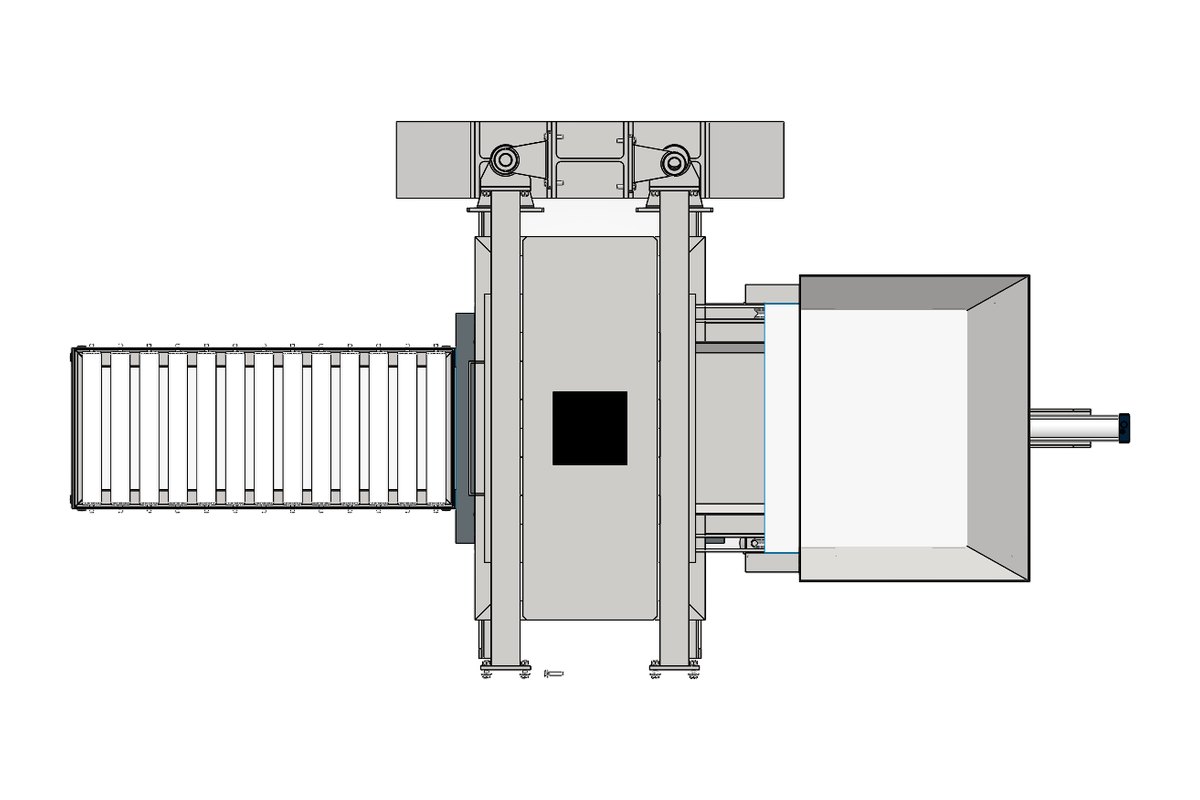
The welded frame and loaded members of a hydraulic press with automatic feeder were checked for stress and deflection under press load, with the results fed back into section sizes and gusset placement before the manufacturing drawings were released.
Hydraulic Press With Automatic Feeder
Custom hydraulic press with an integrated automatic feeder — frame, cylinder mounting and feed mechanism designed and timed as one system.
EV Gearbox Housing FEA: Torque, Static and Shock Load Cases
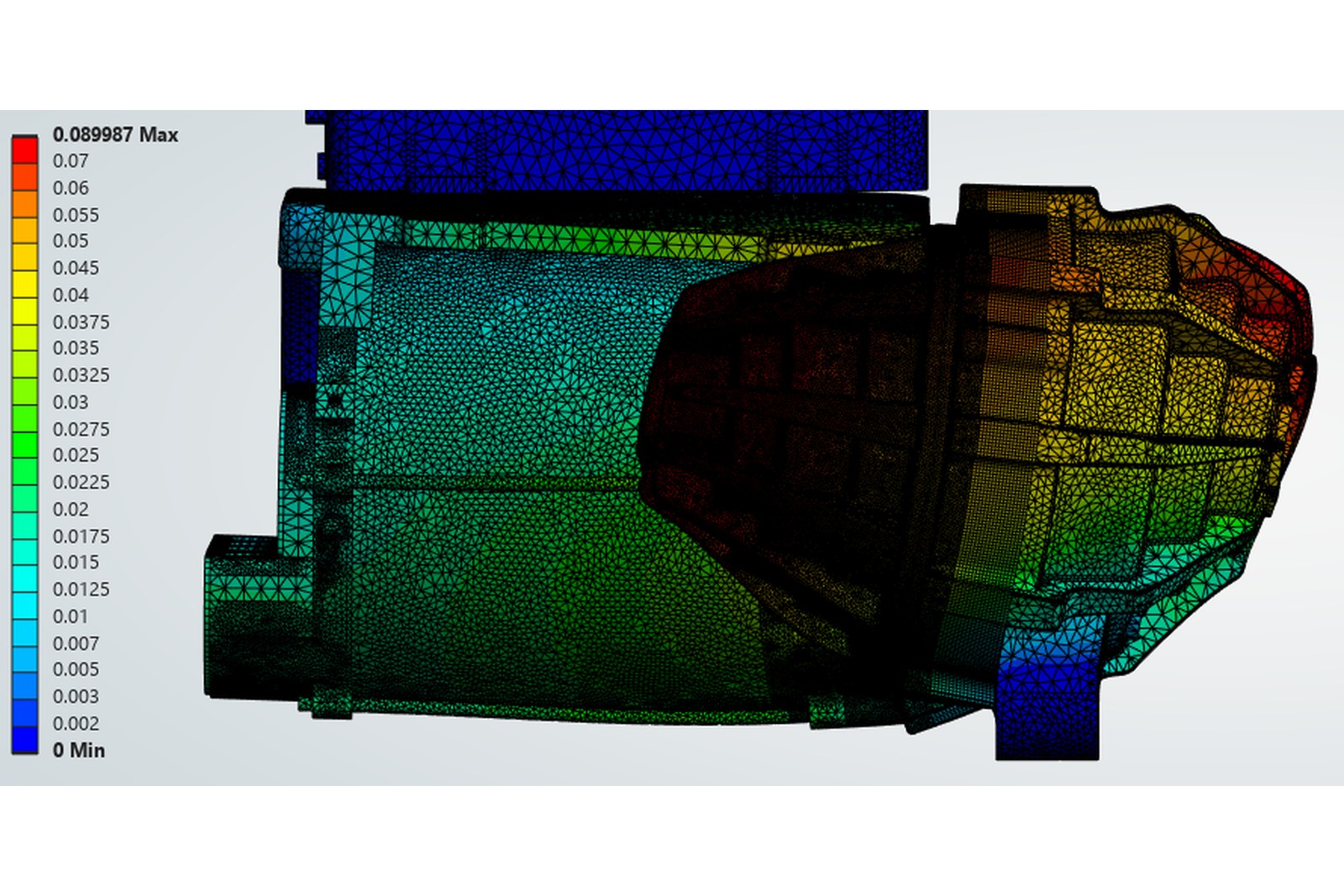
Ansys structural analysis of an electric drive unit gearbox and motor housing under 7,000 N·m forward and reverse torque, bolted-joint static cases and 10 g shock in several orientations, with deformation and stress maps used to revise the housing before casting.
Helical Gear Pair Contact Stress Analysis and Test Fixture
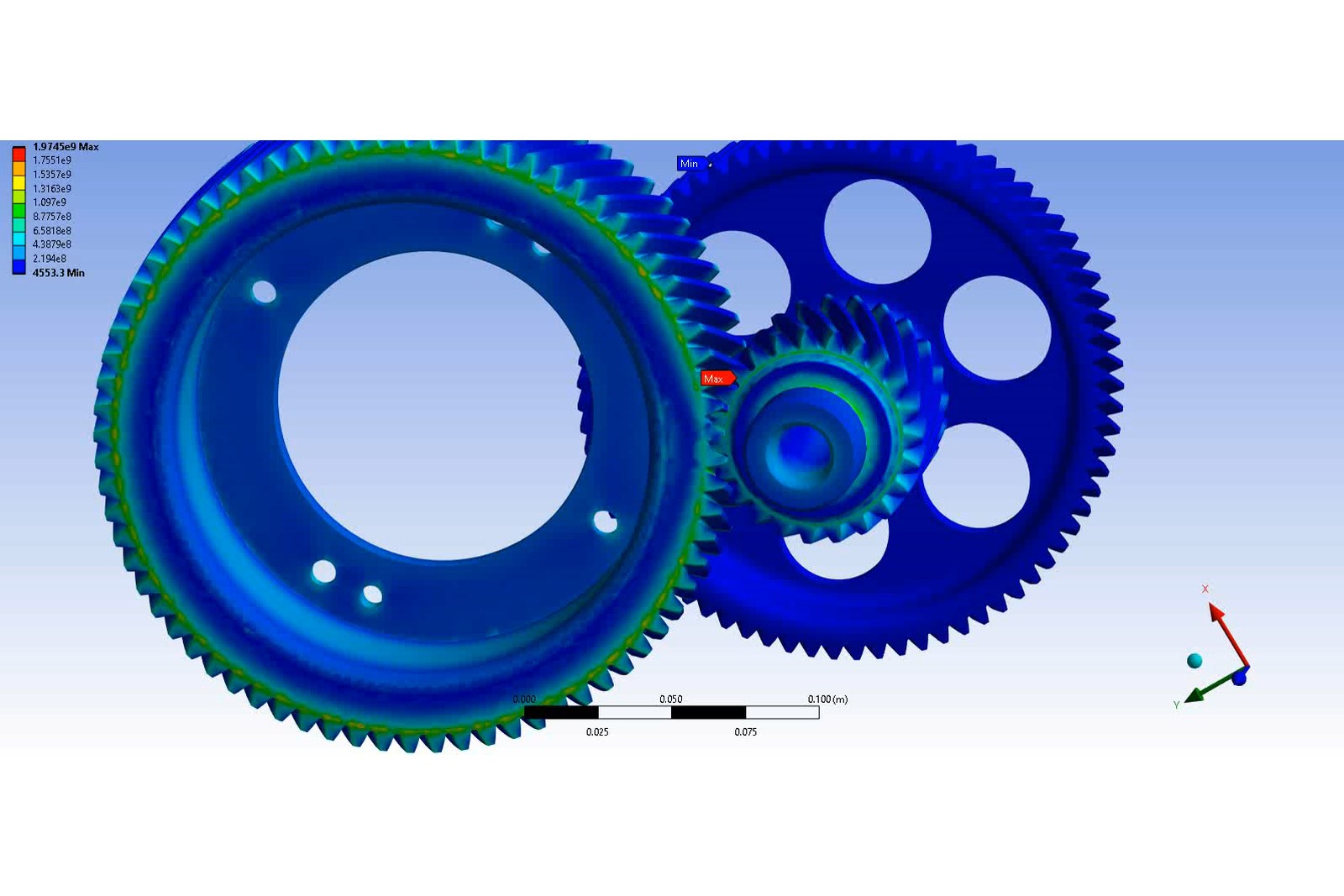
Static structural analysis in Ansys of a two-stage helical gear train at rated torque — von Mises stress at the tooth contact, comparison of an existing and a modified gear pair, and the design of a test fixture to validate the result on a rig.
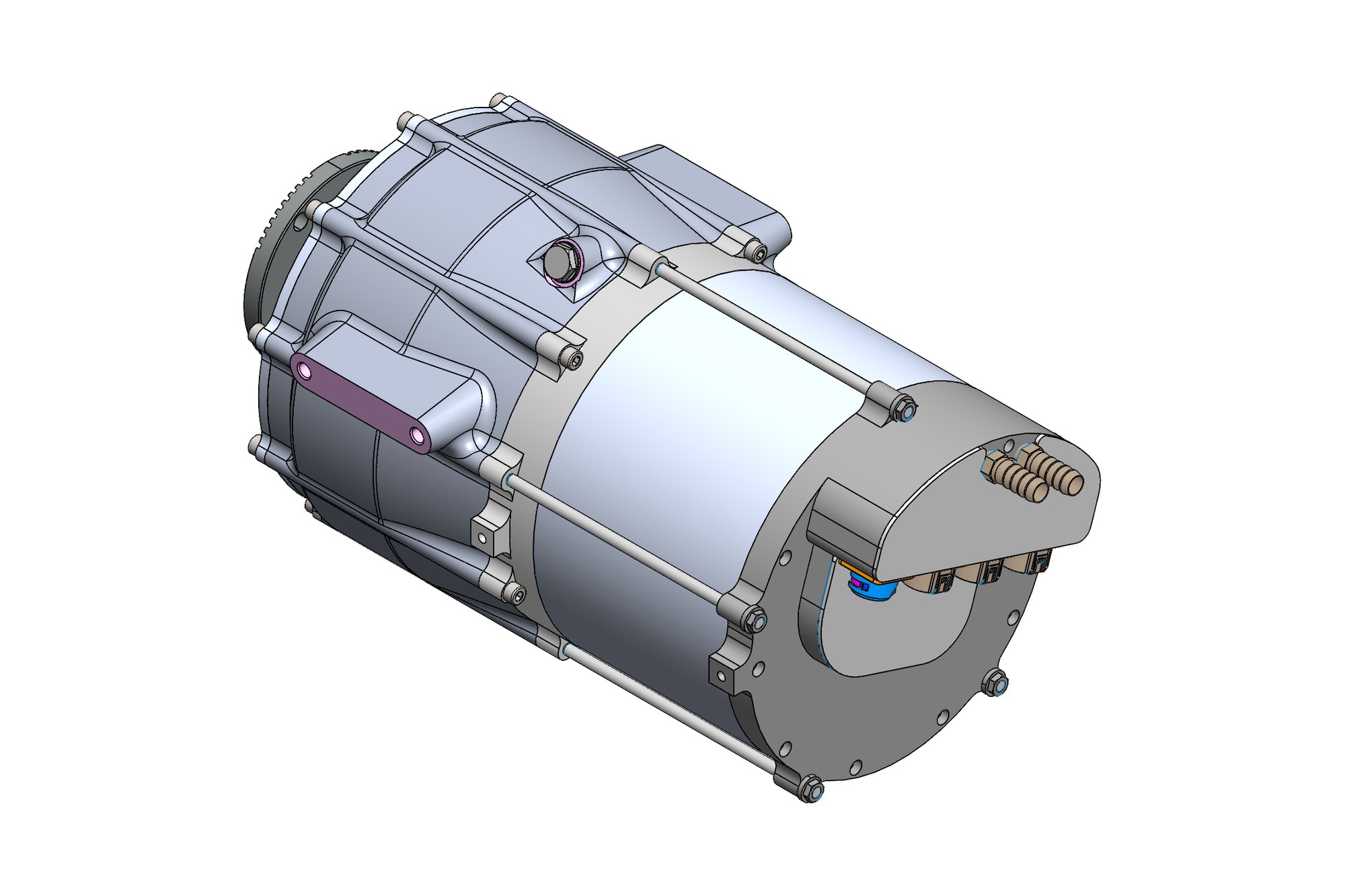
Concentric Reduction Gearbox for an Electric Drive Unit
Concept-to-detail design of a concentric reduction gearbox packaged around an electric motor for a UK drivetrain developer — gear train, housing, bearings, sealing and CV-joint interface, iterated with the client through weekly design reviews.
Commercials
Three ways to engage
No price lists — every package is quoted on its inputs — but the model is always one of these.
Fixed-price project
Defined scope, itemised quote, agreed delivery date. Best for drawing packages, conversions, reverse engineering and analysis studies with clear inputs.
Hourly with a cap
For design development where scope evolves. Weekly hours against an agreed cap; nothing exceeded without approval.
Dedicated engineer
A named engineer on your work month by month, inside your CAD, PDM and standards — an extension of your drawing office.
NDA before files
Your NDA or ours, signed before any drawing changes hands. IP transfers to you on payment.
Controlled access
Only the engineers on your job see your files; stored on controlled systems, deleted on request.
Second-engineer check
Every package checked against your inputs and standard by an engineer who did not do the work.
Technical FAQ
Questions engineers ask before outsourcing fea & cfd simulation
Which software do you use for FEA and CFD?
Ansys Mechanical for structural, modal, fatigue, buckling and thermal analysis, and Ansys CFD for flow and heat-transfer studies. We can supply the project archive if your team runs Ansys.
Can you analyse a model from our CAD system?
Yes — native SolidWorks, Inventor, Creo, Solid Edge or NX files, or STEP/Parasolid. If only drawings exist we model the part first and include that in the quote.
How do you decide boundary conditions?
With you. We propose constraints and loads from the duty description, record them in the report and flag any that strongly influence the result. Unrealistic rigid constraints are the most common cause of misleading FEA, so we treat this step carefully.
Do you check mesh convergence?
Yes. Key results are checked at more than one mesh density and the convergence is stated in the report, alongside a hand-calculation sanity check where one exists.
Can the report be used in our CE or UKCA technical file?
It can support it. The report states methods, inputs and results so your responsible engineer can reference it; the conformity assessment itself remains with the manufacturer.
Is "structural analysis" the same as what you offer?
In the mechanical sense, yes — stress, deflection, modal and fatigue analysis of machine and equipment structures. We do not provide civil or building structural engineering.
How long does a typical study take?
A single-load-case static study on existing CAD is usually a few working days; multi-case, fatigue or CFD studies are quoted with a timeline after we see the geometry and loads.
How accurate are FEA results?
As accurate as the inputs. Loads, constraints and material data drive the answer far more than the solver, so we state every assumption, check mesh convergence and compare against a hand calculation where one exists. For safety-critical parts, analysis should be confirmed by physical testing, and the report says where that is advisable.
What happens if the analysis shows the design will not pass?
You get the reason and the fix: where stress, deflection, life or temperature misses your criterion, and which changes — section size, gusset, fillet, material or weld detail — would bring it back within limits, ranked by effect. Because we also design and draft, we can model the preferred change, re-run the study and update the drawings in the same engagement.
Why outsource FEA rather than run it in-house?
Most teams need an analyst for a project, not all year. Outsourcing avoids carrying a simulation licence and a specialist for occasional studies, while the report, model archive and results are yours once the job is paid. We sign an NDA before any files are shared, and every study is quoted with a defined scope, usually within one business day.
Related services
Send the job. Get an engineer's answer.
Drawings, a sketch or a description — itemised quote, deliverables list and timeline within one business day (IST).