- Client
- Agricultural equipment manufacturer, Gujarat (name withheld under NDA)
- Industry
- Agricultural Equipment
- Service
- Machine & Equipment Design
- Platform
- SolidWorks
- Client region
- India
The challenge
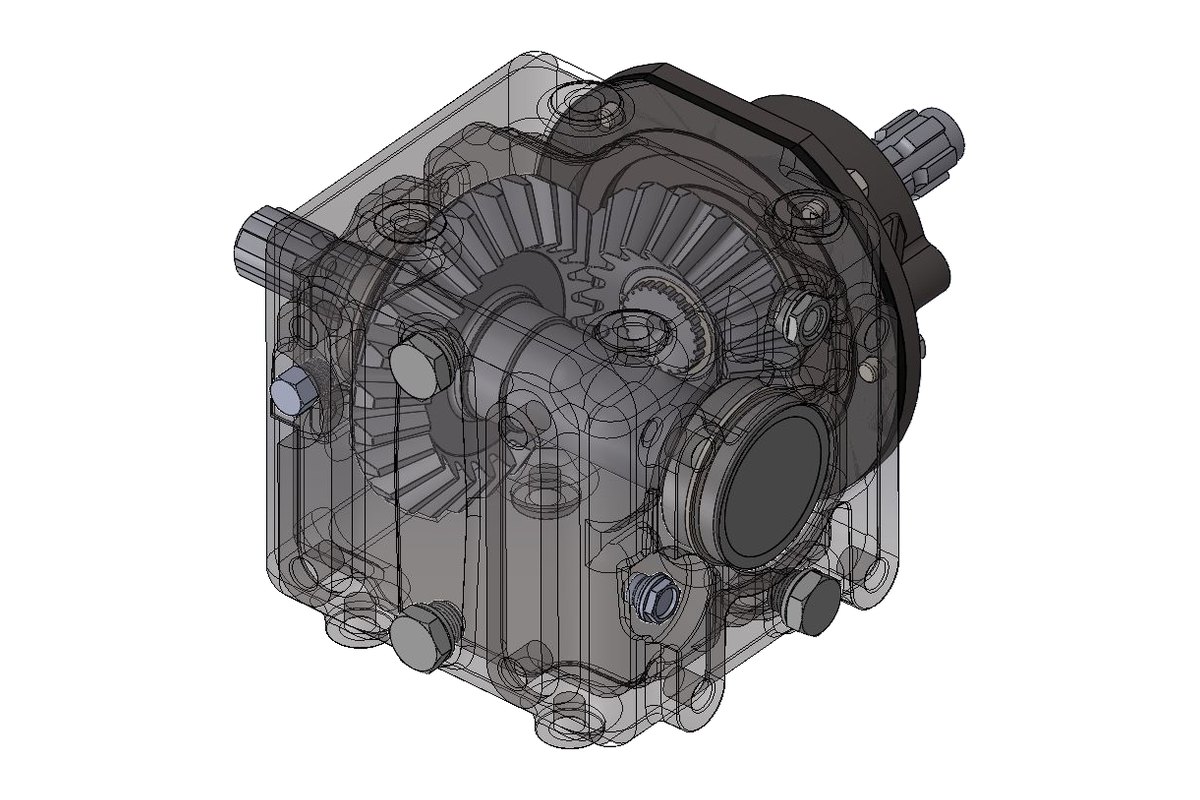
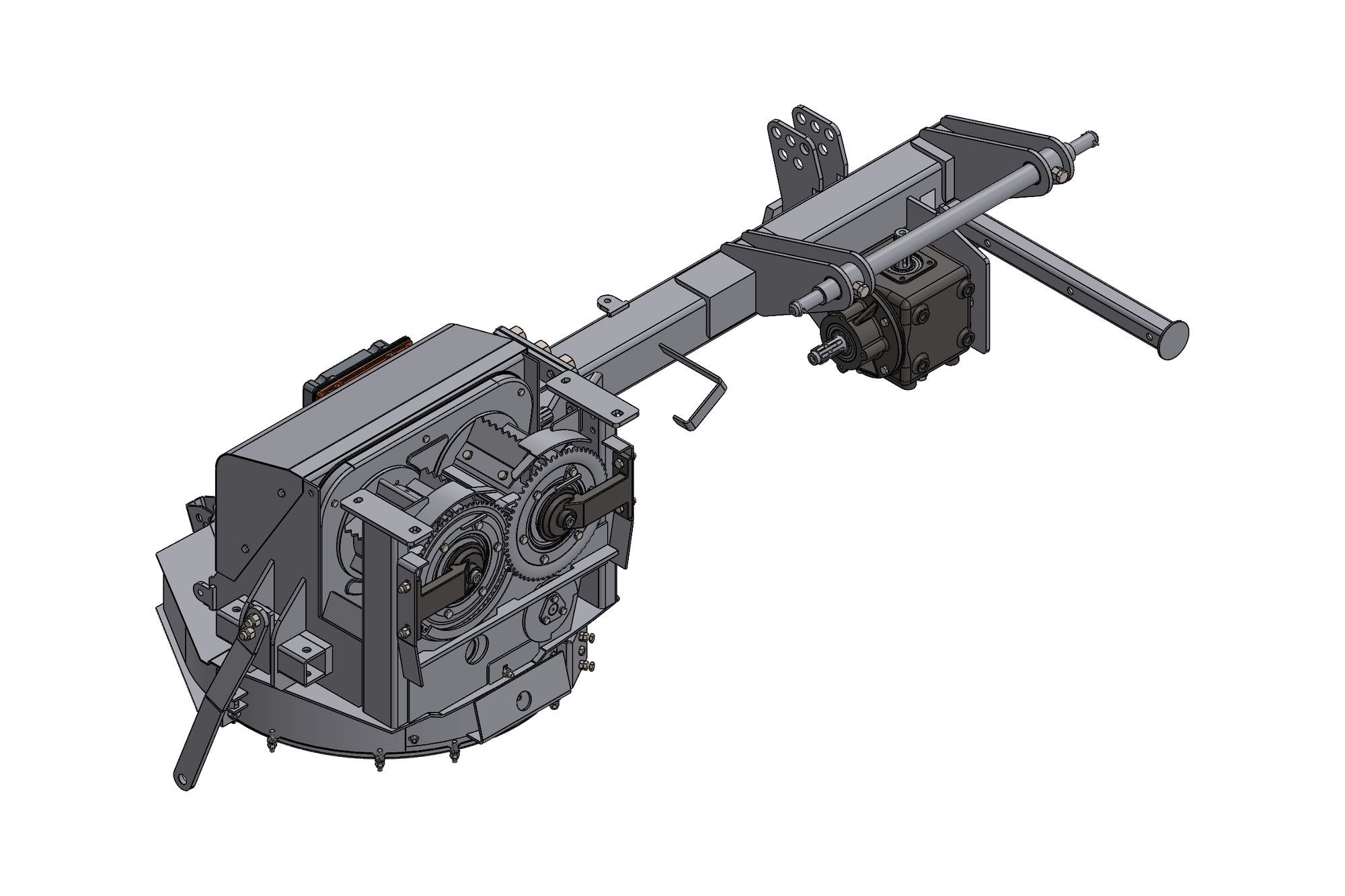
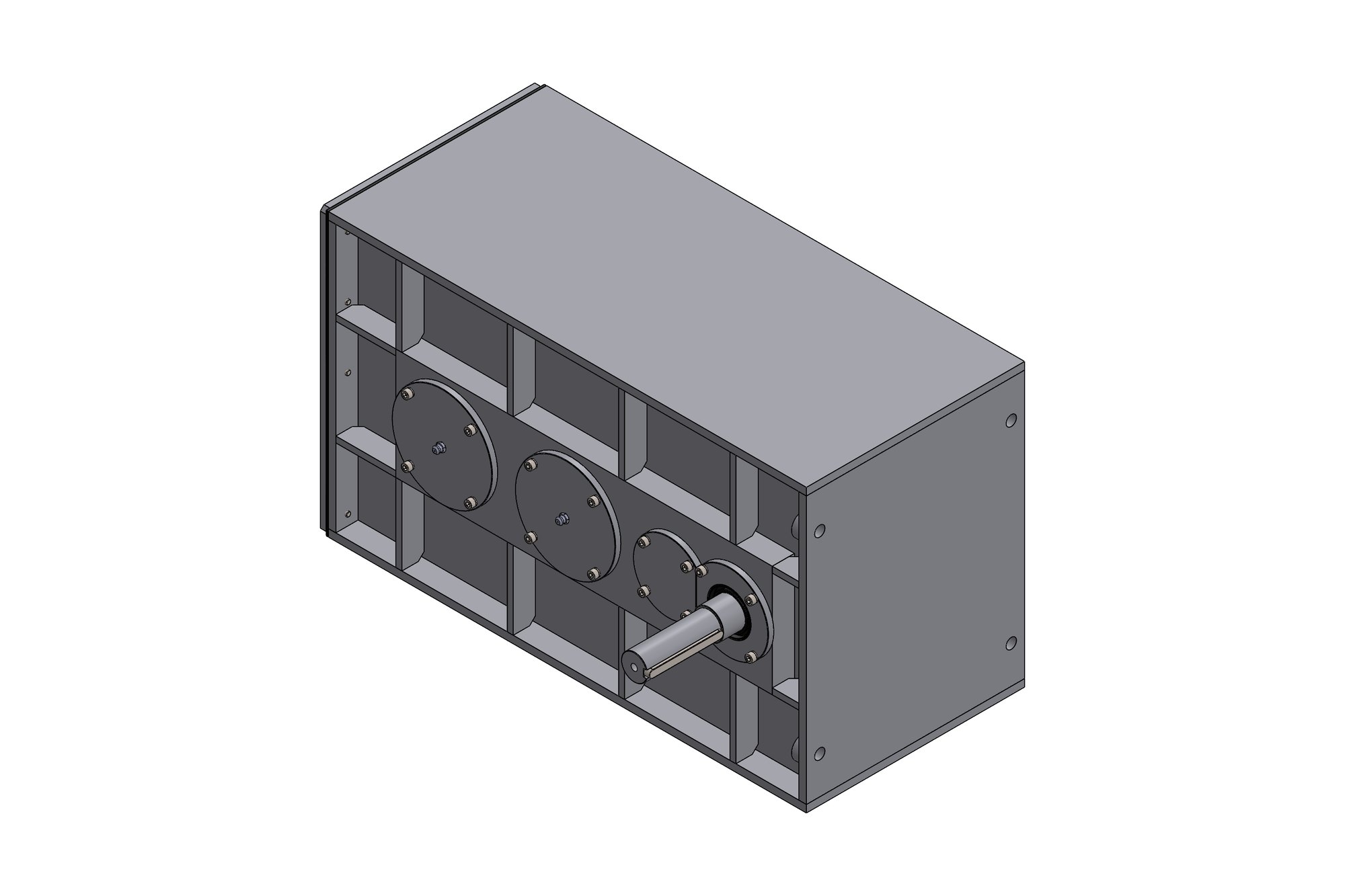
This gearbox had to fit an interface that already existed — the same mounting face, the same shaft height, the same fixing pattern. That constraint drives everything: the ratio has to be achieved inside a fixed envelope rather than the envelope growing to suit the ratio.
Getting the ratio inside the envelope
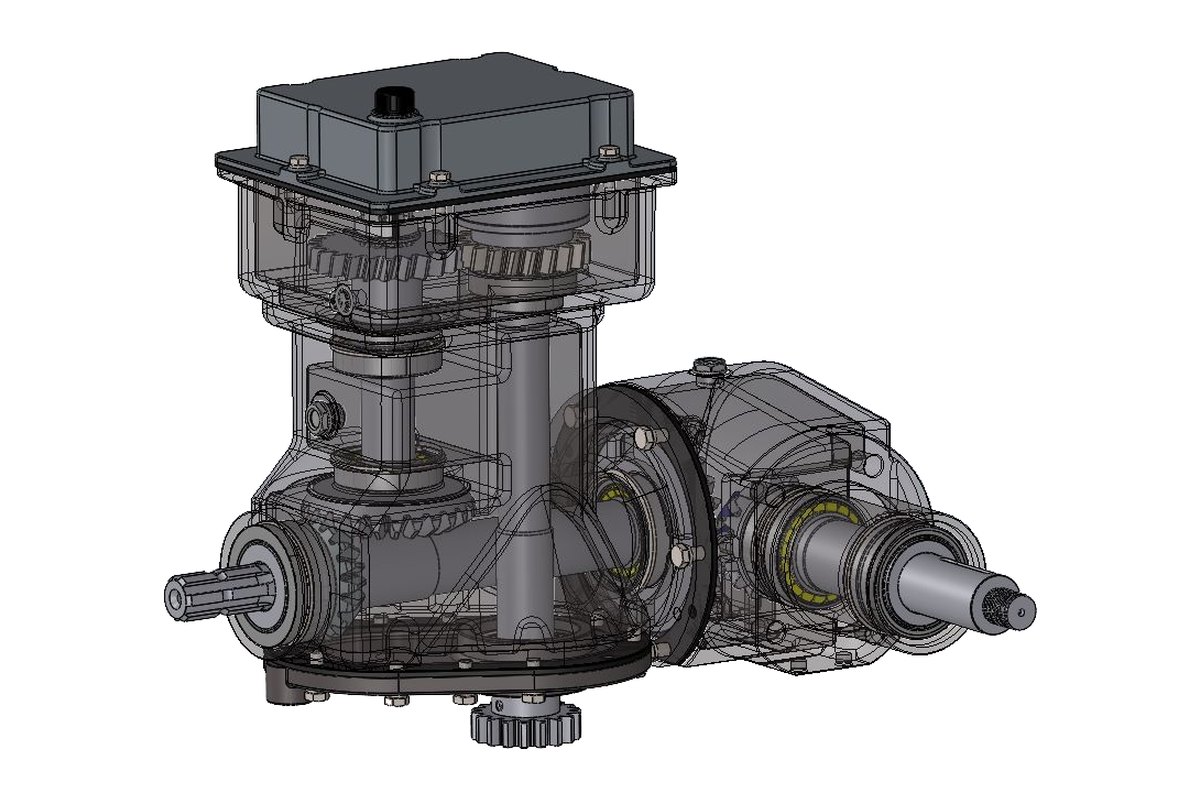
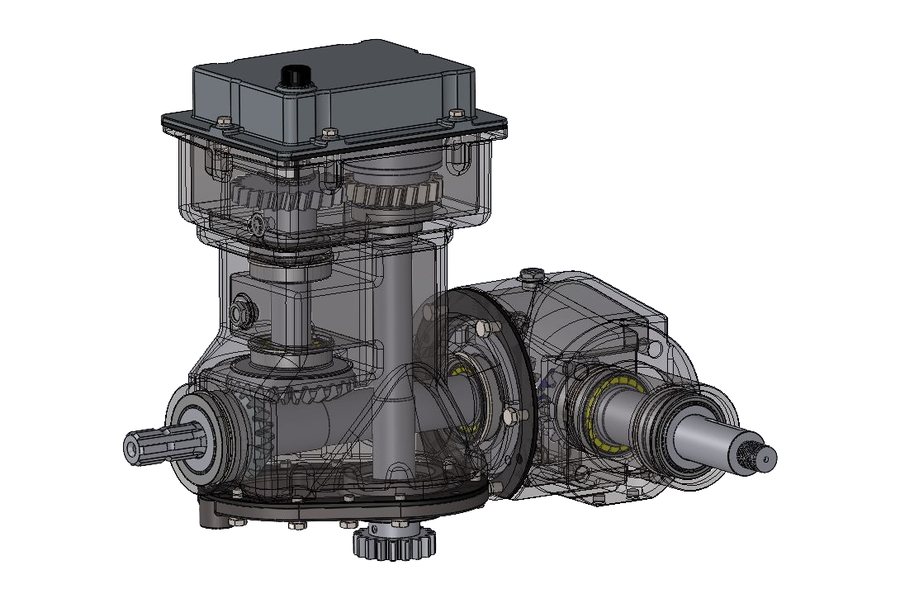
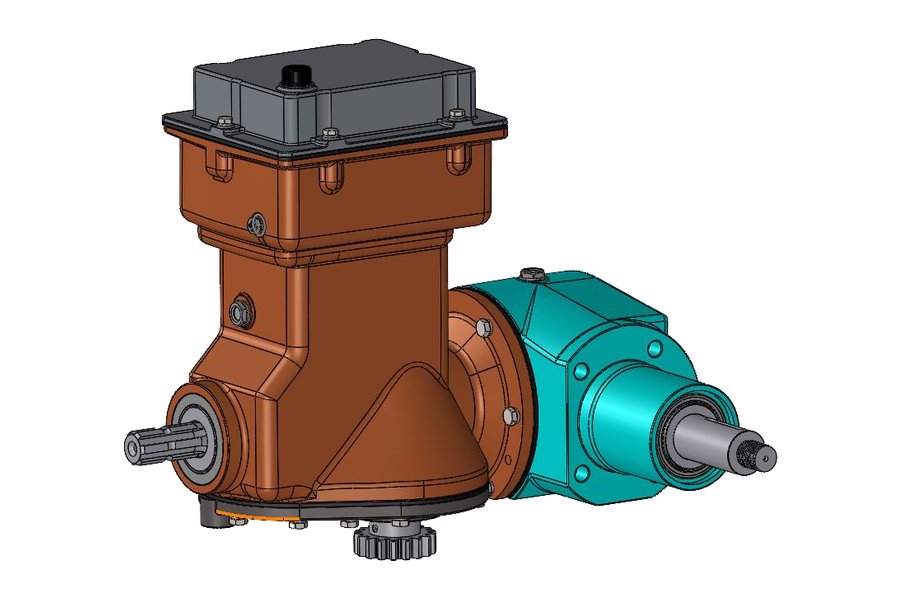
The reduction is taken in stages rather than all at once. Power enters on a horizontal splined shaft, turns through a right-angle bevel set into a vertical intermediate shaft, then passes through a cylindrical gear stage enclosed beneath a bolted top cover before reaching the output. Splitting the ratio this way keeps each mesh within sensible tooth proportions and lets the whole train fit the fixed centre distance — something a single stage could not have achieved without oversized gears fouling the housing.
Matching the primary stage
The output stage runs on rolling-element bearings in a bolted flange housing with a pilot register, so adjoining sub-assemblies stay coaxial without depending on the bolts for location. Bearing and seal specifications were kept common with the primary unit wherever possible, which reduces the spares the end user has to hold — something that matters more to a farmer than a marginal weight saving.
What was delivered
A 3D assembly modelled to the existing interface, manufacturing drawings, a gear data sheet, and a bill of materials sharing bought-out components with the primary gearbox.
Have a similar requirement? Send the drawings, a sketch or a description — an engineer will scope it and reply with an itemised quote within one business day. Request an engineering quote.